
EPR Used Oil
Hit Your EPR Used Oil Fulfilment Targets. On Time. Every Time
Onboard with India’s most trusted EPR fulfilment platform, verified recyclers, real-time reporting, and 100% compliance.
EPR Used Oil
Hit Your EPR Used Oil Fulfilment Targets. On Time. Every Time
Onboard with India’s most trusted EPR fulfilment platform, verified recyclers, real-time reporting, and 100% compliance.
The reality today
The reality today
Used oil EPR is now about visibility, traceability, and brand accountability.
Your team is already or will be stretched thin trying to track used oil sales across channels, verify recycler credentials, manage CPCB filings and avoid environmental compensation.
All it takes is one missing report, one fake certificate, or one unregistered recycler… And suddenly, you’re staring at CPCB penalties and brand-level reputational risks.
How Recykal Simplifies Used Oil EPR
01
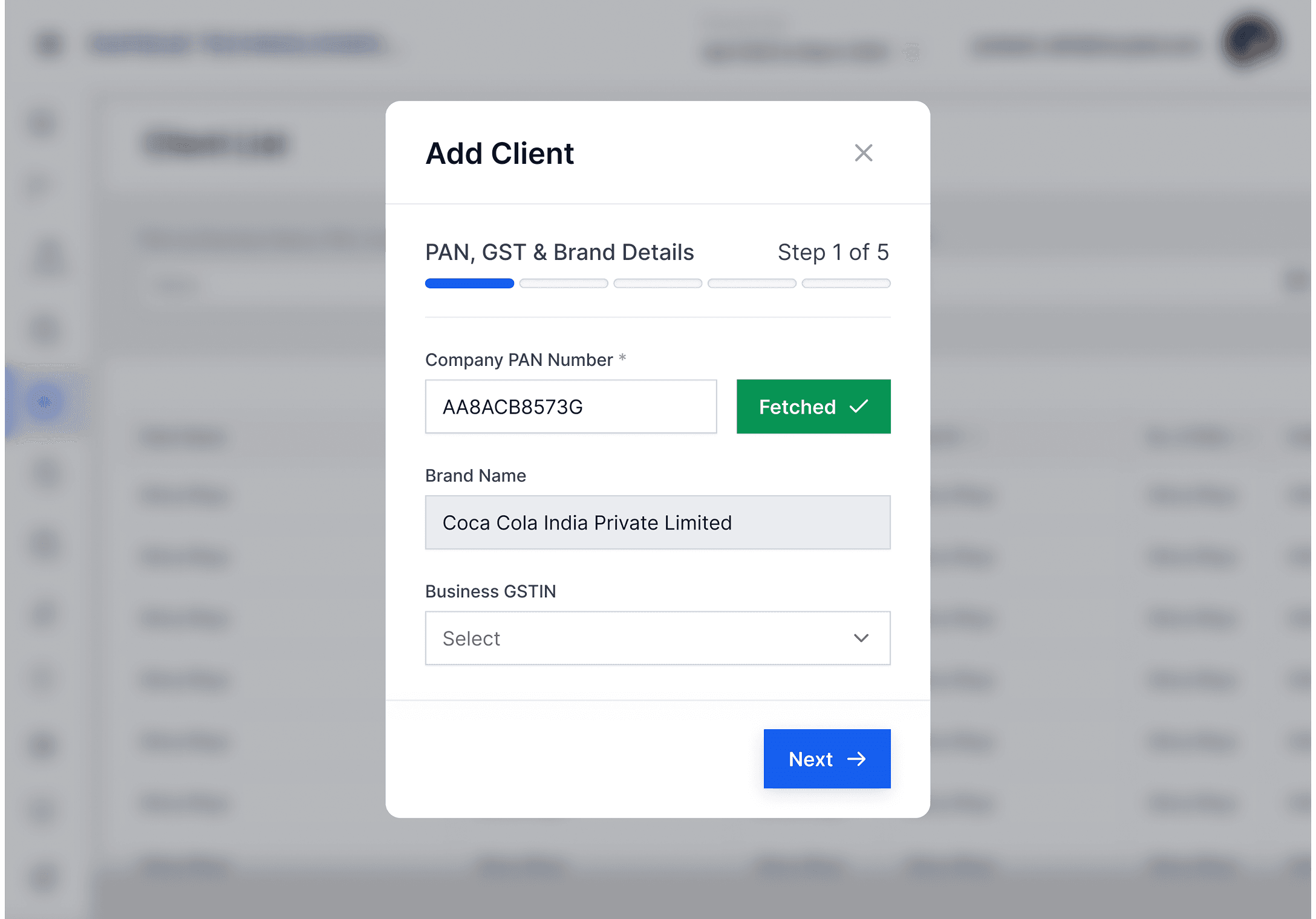
Discover and Manage Vendors
We onboard and verify every waste processor and recycler to ensure CPCB compliance, so you can work with trusted partners and focus on action.
02
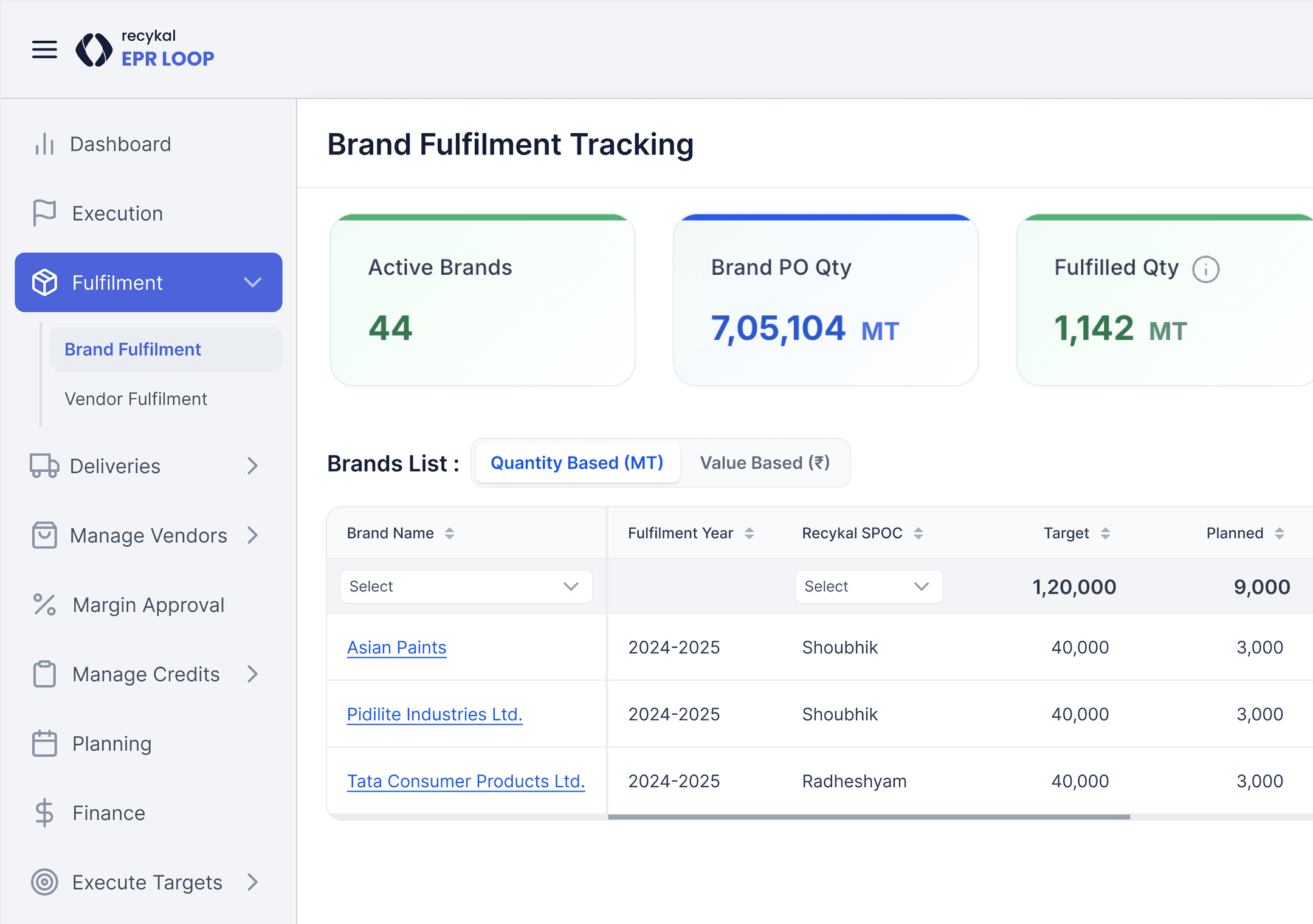
Plan & Monitor Your EPR Fulfilment Online
Stay ahead of deadlines with real-time tracking and monitoring of your EPR activities
03
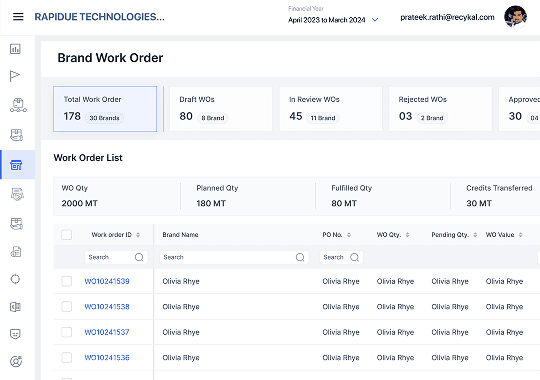
Get Audit-Ready Documentation
Digital trail from start to finish, including certificate verification, vendor due diligence, and proof of fulfilment.
How Recykal Simplifies Used Oil EPR
01
Discover and Manage Vendors
We onboard and verify every waste processor and recycler to ensure CPCB compliance, so you can work with trusted partners and focus on action.
02
Plan & Monitor Your EPR Fulfilment Online
Stay ahead of deadlines with real-time tracking and monitoring of your EPR activities
03
Get Audit-Ready Documentation
Digital trail from start to finish, including certificate verification, vendor due diligence, and proof of fulfilment.
How Recykal Simplifies Used Oil EPR
01
Discover and Manage Vendors
We onboard and verify every waste processor and recycler to ensure CPCB compliance, so you can work with trusted partners and focus on action.
02
Plan & Monitor Your EPR Fulfilment Online
Stay ahead of deadlines with real-time tracking and monitoring of your EPR activities
03
Get Audit-Ready Documentation
Digital trail from start to finish, including certificate verification, vendor due diligence, and proof of fulfilment.
All Oil Categories Covered
All Oil Categories Covered
1
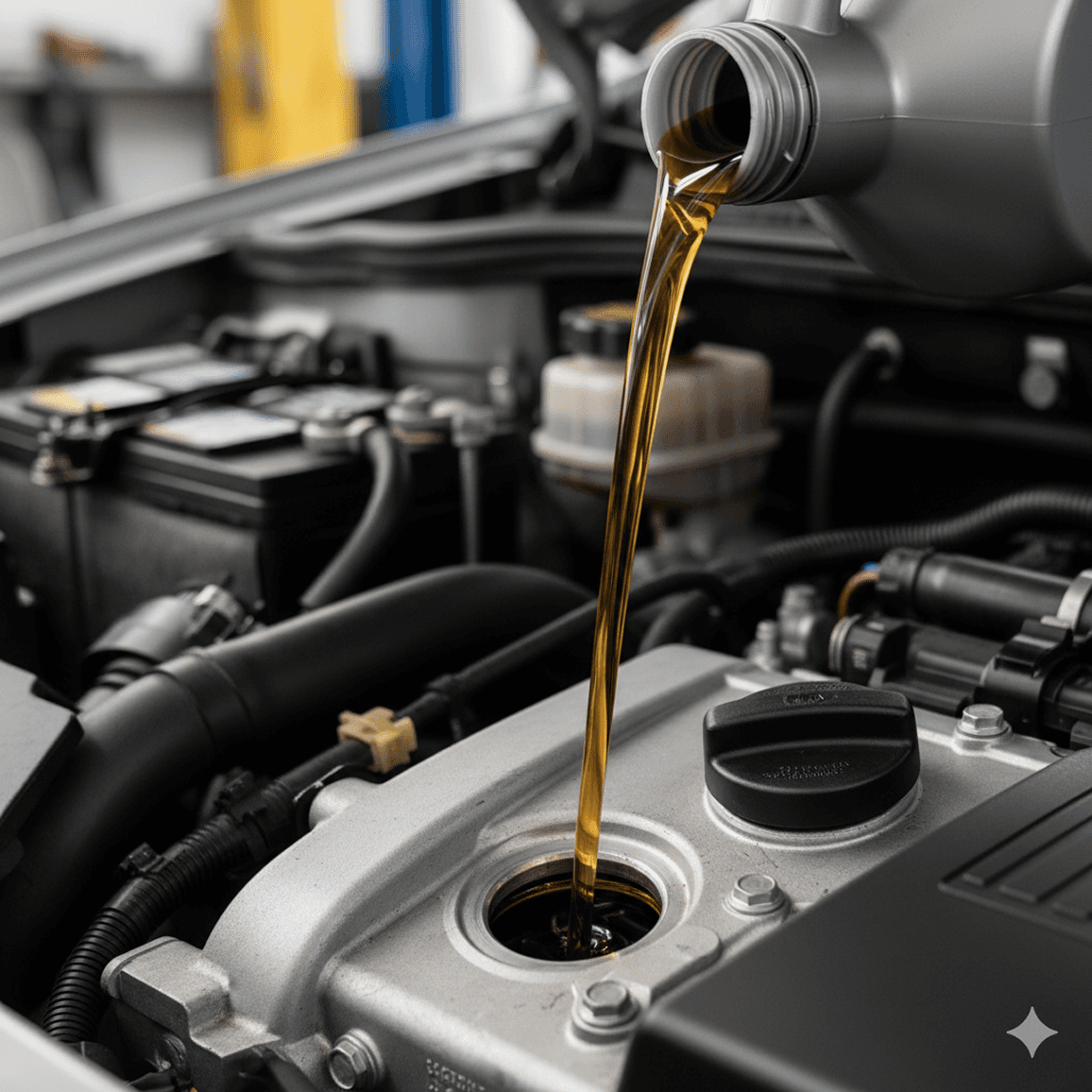
Engine Oil
Large & Small Consumer Electronics
Category I
1
Engine Oil
Large & Small Consumer Electronics
Category I
2

Hydraulic Oil
IT & Telecom Equipment
Category II
2
Hydraulic Oil
IT & Telecom Equipment
Category II
3
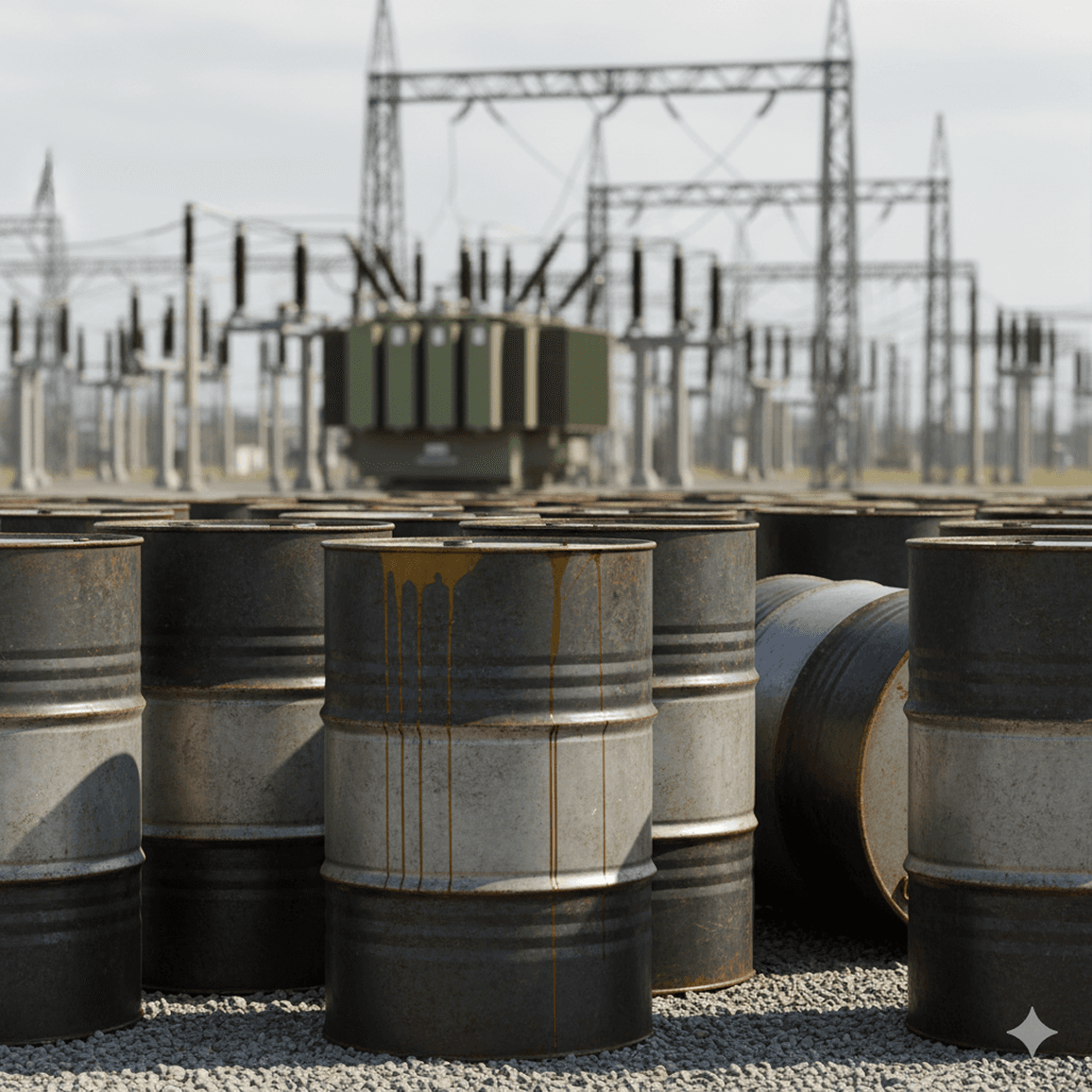
Transformer Oil
LED Bulbs and Equipment
Category III
3
Transformer Oil
LED Bulbs and Equipment
Category III
4

Gear Oil
Category IV
4
Gear Oil
Category IV
4

Brake Oil
Category V
4
Brake Oil
Category V
4
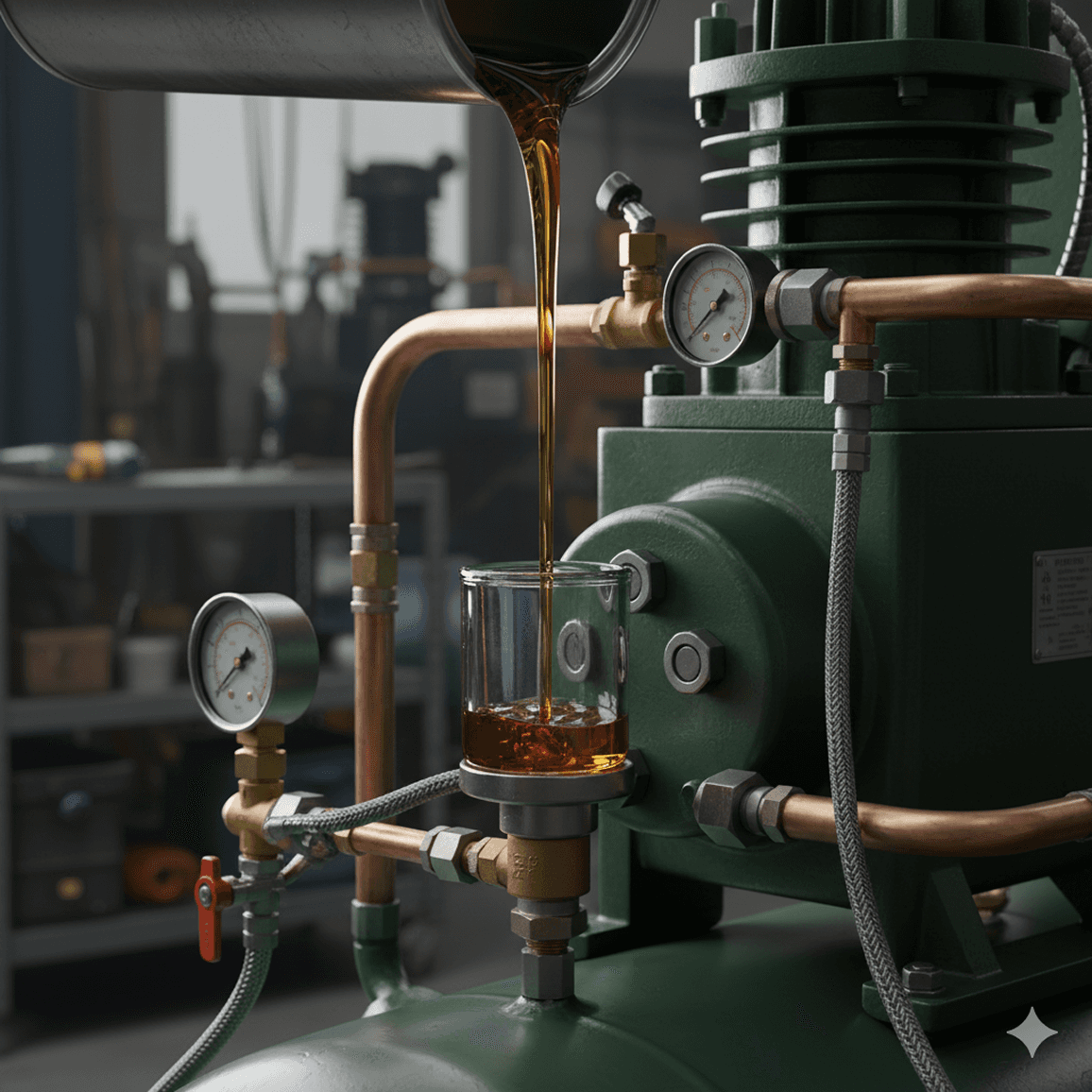
Compressor Oil
Category VI
4
Compressor Oil
Category VI
4

Thermal Fluids
Category VII
4
Thermal Fluids
Category VII
4

Re-refined Base Oils and more
Category VIII
4
Re-refined Base Oils and more
Category VIII
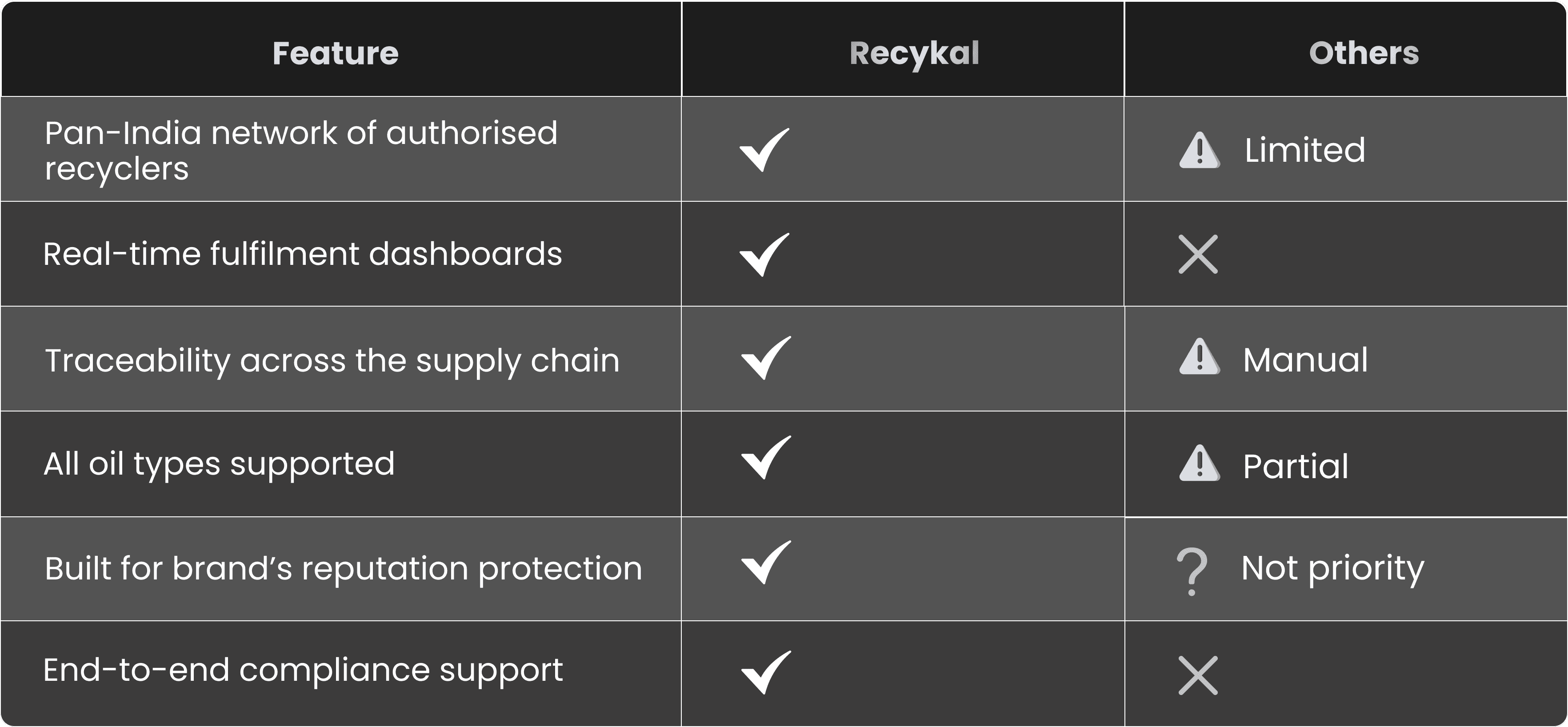
Why Do Tyre Brands Choose Recykal?
Why Do Tyre Brands Choose Recykal?

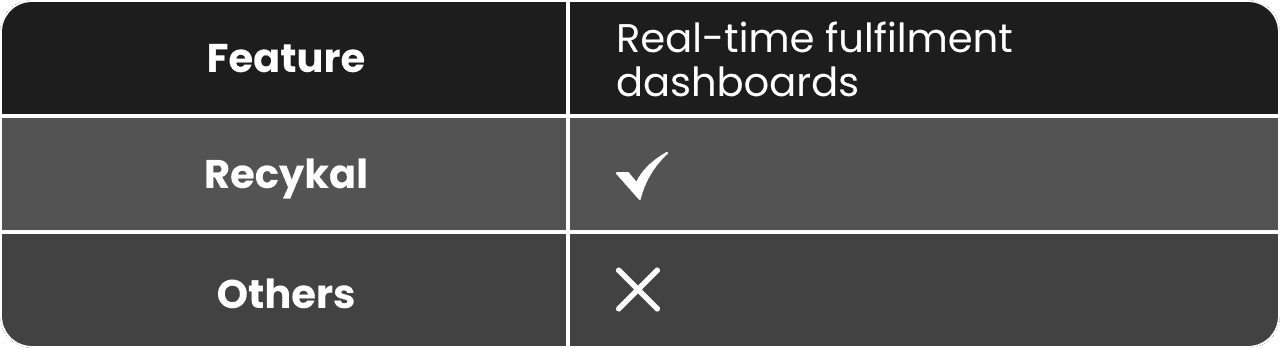
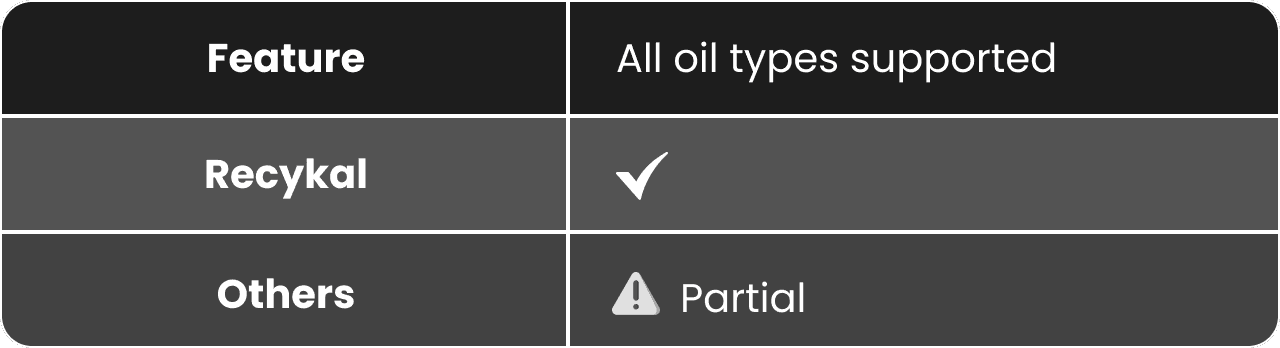
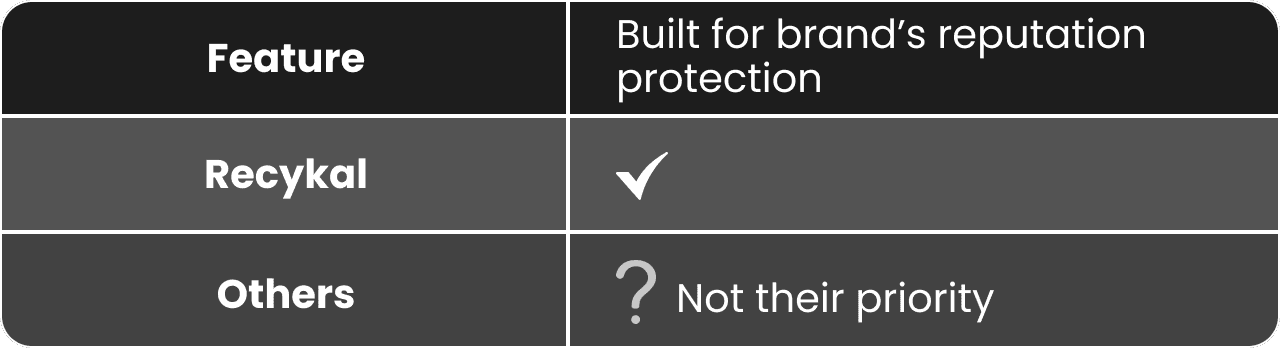
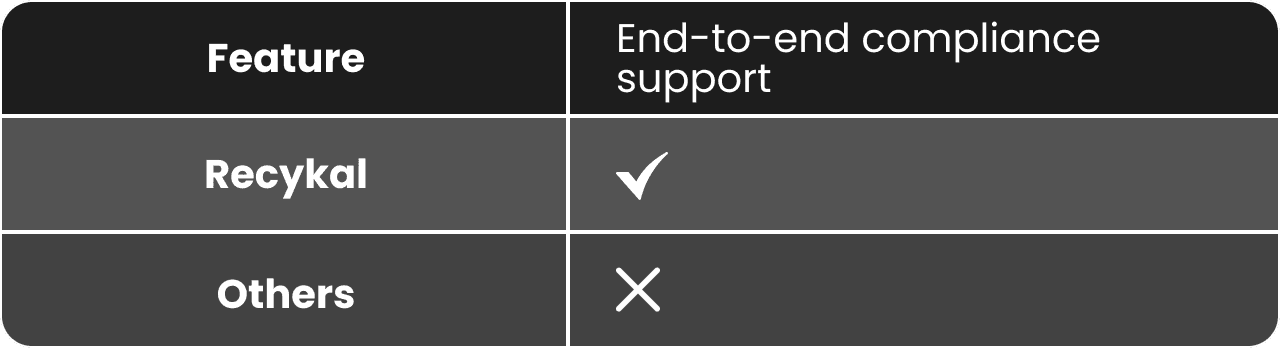




Let’s take EPR compliance off your worry list.
Let’s take EPR compliance off your worry list.
Whether you’re from EHS, Legal, Sustainability, Procurement or Compliance, Recykal helps you stay compliant, without chaos.
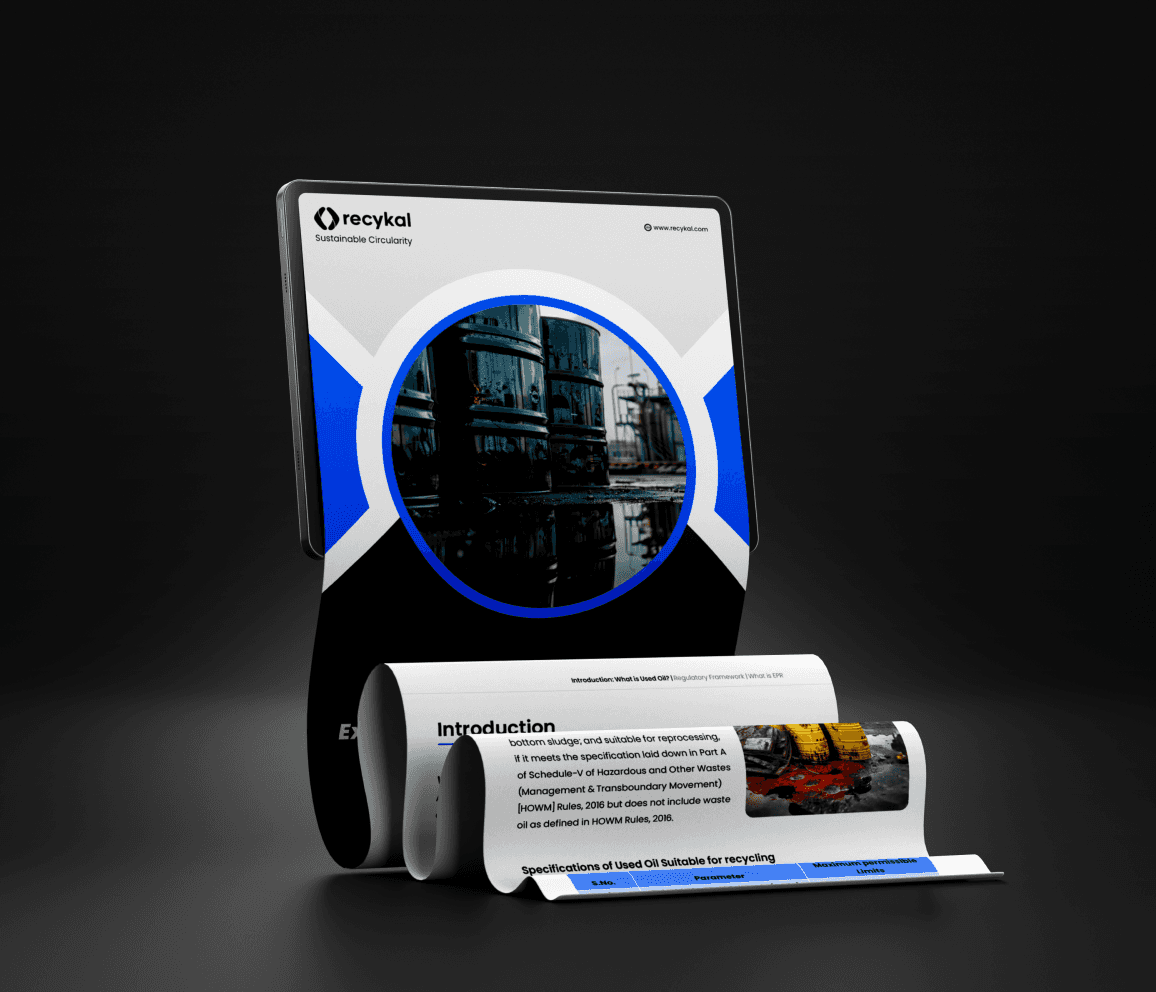
Download our EPR Used Oil E-book, a simplified guide to the latest CPCB rules, timelines, and best practices for your team.
Whether you’re from EHS, Legal, Sustainability, Procurement or Compliance, Recykal helps you stay compliant, without chaos.
Download our EPR Used Oil E-book, a simplified guide to the latest CPCB rules, timelines, and best practices for your team.
Frequently Asked Questions
Frequently Asked Questions
Get quick answers to your most pressing questions
What is EPR compliance for used oil?
Under the CPCB's EPR rules (effective April 1, 2024), producers and importers of base/lubrication oil must ensure their used oil is safely re-refined or recovered and must meet annual recycling targets through verified credits.
Who needs to fulfil EPR obligations for used oil?
- Manufacturers/importers of base oil and lubrication oil - Importers of used oil - Brands selling oil under private or co-branded labels - Producers selling domestically manufactured or imported oil
What oil types are covered?
- Engine Oil - Hydraulic Oil - Transformer Oil - Gear Oil - Brake Oil - Cutting Oil - Thermal Fluids - Re-refined base oils (Complete list: 16 oil types covered under CPCB’s EPR framework)
What documents are required for registration?
- KYC of authorised personnel - Business registration (CIN, TIN, GST) - Import/export documentation - Sales, procurement, and used oil generation data for 2 years Recykal manages the entire registration and documentation process.
What are the used oil recycling targets?
- FY 2024–25: 5% of FY 2022–23 sales - FY 2025–26: 10% of FY 2023–24 sales - FY 2026–27: 20% of FY 2024–25 sales - Up to 50% target for FY 2030–31 and onwards.
Can Recykal support with filings and CPCB audit requirements?
Yes. Our platform offers quarterly/annual return management, automated alerts, and audit-ready documentation.
What happens if we miss our targets?
Failure to comply may lead to: Environmental Compensation (EC) fines CPCB portal suspension Loss of credibility with stakeholders Recykal helps you avoid ECs through traceable fulfilment and verified credits.
How long does onboarding take?
Typically 3–5 working days. We’ll guide your team through documentation, CPCB registration, and platform training.
Are used oil credits verified?
Yes. Recykal only partners with CPCB-authorised recyclers. All credits are validated, audit-traceable, and registered on the official portal.
Is Recykal CPCB-approved?
Recykal is a recognised facilitator working exclusively with CPCB-authorised entities. Our platform aligns with all current used oil regulations and guidelines.
What is EPR compliance for used oil?
Under the CPCB's EPR rules (effective April 1, 2024), producers and importers of base/lubrication oil must ensure their used oil is safely re-refined or recovered and must meet annual recycling targets through verified credits.
Who needs to fulfil EPR obligations for used oil?
- Manufacturers/importers of base oil and lubrication oil - Importers of used oil - Brands selling oil under private or co-branded labels - Producers selling domestically manufactured or imported oil
What oil types are covered?
- Engine Oil - Hydraulic Oil - Transformer Oil - Gear Oil - Brake Oil - Cutting Oil - Thermal Fluids - Re-refined base oils (Complete list: 16 oil types covered under CPCB’s EPR framework)
What documents are required for registration?
- KYC of authorised personnel - Business registration (CIN, TIN, GST) - Import/export documentation - Sales, procurement, and used oil generation data for 2 years Recykal manages the entire registration and documentation process.
What are the used oil recycling targets?
- FY 2024–25: 5% of FY 2022–23 sales - FY 2025–26: 10% of FY 2023–24 sales - FY 2026–27: 20% of FY 2024–25 sales - Up to 50% target for FY 2030–31 and onwards.
Can Recykal support with filings and CPCB audit requirements?
Yes. Our platform offers quarterly/annual return management, automated alerts, and audit-ready documentation.
What happens if we miss our targets?
Failure to comply may lead to: Environmental Compensation (EC) fines CPCB portal suspension Loss of credibility with stakeholders Recykal helps you avoid ECs through traceable fulfilment and verified credits.
How long does onboarding take?
Typically 3–5 working days. We’ll guide your team through documentation, CPCB registration, and platform training.
Are used oil credits verified?
Yes. Recykal only partners with CPCB-authorised recyclers. All credits are validated, audit-traceable, and registered on the official portal.
Is Recykal CPCB-approved?
Recykal is a recognised facilitator working exclusively with CPCB-authorised entities. Our platform aligns with all current used oil regulations and guidelines.
What is EPR compliance for used oil?
Under the CPCB's EPR rules (effective April 1, 2024), producers and importers of base/lubrication oil must ensure their used oil is safely re-refined or recovered and must meet annual recycling targets through verified credits.
Who needs to fulfil EPR obligations for used oil?
- Manufacturers/importers of base oil and lubrication oil - Importers of used oil - Brands selling oil under private or co-branded labels - Producers selling domestically manufactured or imported oil
What oil types are covered?
- Engine Oil - Hydraulic Oil - Transformer Oil - Gear Oil - Brake Oil - Cutting Oil - Thermal Fluids - Re-refined base oils (Complete list: 16 oil types covered under CPCB’s EPR framework)
What documents are required for registration?
- KYC of authorised personnel - Business registration (CIN, TIN, GST) - Import/export documentation - Sales, procurement, and used oil generation data for 2 years Recykal manages the entire registration and documentation process.
What are the used oil recycling targets?
- FY 2024–25: 5% of FY 2022–23 sales - FY 2025–26: 10% of FY 2023–24 sales - FY 2026–27: 20% of FY 2024–25 sales - Up to 50% target for FY 2030–31 and onwards.
Can Recykal support with filings and CPCB audit requirements?
Yes. Our platform offers quarterly/annual return management, automated alerts, and audit-ready documentation.
What happens if we miss our targets?
Failure to comply may lead to: Environmental Compensation (EC) fines CPCB portal suspension Loss of credibility with stakeholders Recykal helps you avoid ECs through traceable fulfilment and verified credits.
How long does onboarding take?
Typically 3–5 working days. We’ll guide your team through documentation, CPCB registration, and platform training.
Are used oil credits verified?
Yes. Recykal only partners with CPCB-authorised recyclers. All credits are validated, audit-traceable, and registered on the official portal.
Is Recykal CPCB-approved?
Recykal is a recognised facilitator working exclusively with CPCB-authorised entities. Our platform aligns with all current used oil regulations and guidelines.